Exclusive Entry
Explore the Pearl Harbor Visitor Center and its engaging museums, filled with historical exhibits and educational displays.


Search For Tours
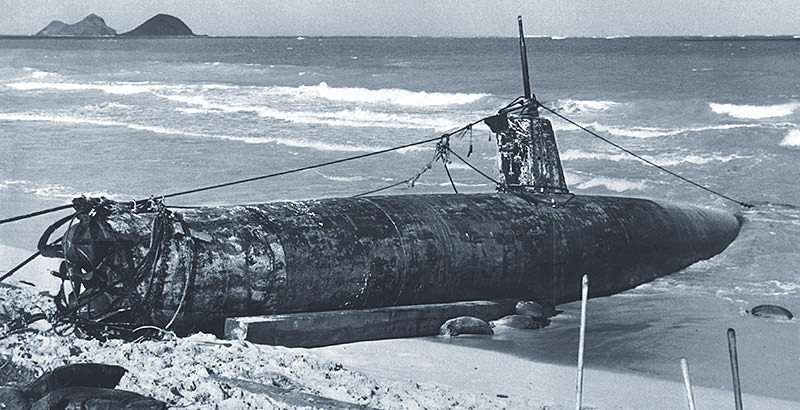
The first of many Pearl Harbor facts many people don’t realize is that on the morning of December 7th, 1941, the Wickes-class destroyer USS Ward attacked and sank a Ko-hyoteki-class midget submarine near the entrance to the harbor, making it not only the first shot fired on that day, but the first official American shots in the War. The minesweeper Condor spotted the Japanese sub’s periscope above the water, which alerted the crew of the Ward, who opened fire on the intruder. Unfortunately, the reports from the Ward were discounted and disbelieved by Navy brass. Something they’d pay dearly for. The ship’s crew didn’t get confirmation that they’d sunk the submarine for over 60 years.

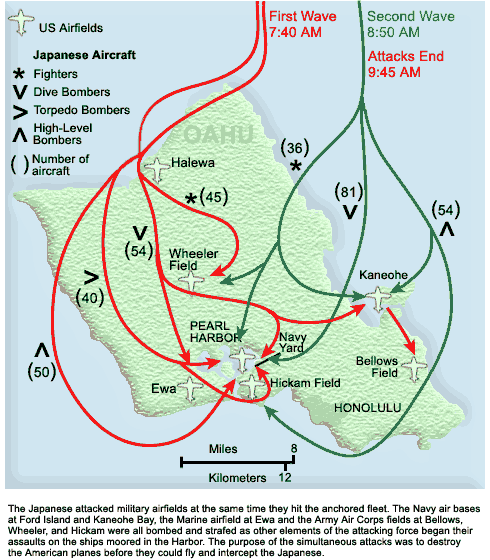
Coming in from all directions, the defenders had no idea which direction they should fire. Wave after wave, Japanese planes arrived, targeting airstrips, ships, buildings, and storage areas.
Dive bombers, fighters, torpedo bombers, and high-level bombers blanketed the sky, dropping their deadly payloads across the island of Oahu. The two waves of aircraft enacted a heavy toll on their targets, namely battleship row.
December 7th, 1941 – A Date Which Will Live In Infamy… (listen now to his appeal to congress for a declaration of war)
With the Japanese attack on Pearl Harbor, the U.S. could no longer avoid an active fight. On December 8, U.S. President Franklin Delano Roosevelt asked Congress to approve his declaration of war. The US declared war on Japan on December 8th.
Three days later, Japanese allies Germany and Italy declared war against the United States. More than two years after the start of the conflict, the United States finally entered World War II.
Reading about Pearl Harbor is just the beginning. Experience these historic sites firsthand with our Pearl Harbor tours, including visits to the USS Arizona Memorial and Battleship Missouri. You can add or include the Pearl Harbor Aviation Museum and Bowfin Submarine Museum with our Complete Pearl Harbor Tour. Walk through history, see historic landmarks up close, and gain a deeper understanding of the events that shaped World War II.
Make the most of your time on Oahu by combining Pearl Harbor with other island highlights. Explore Honolulu’s landmarks on our Historic City Tour, discover scenic coastlines and iconic sights on our Circle Island Tour, or experience Hawaiian culture and traditions at the Polynesian Cultural Center. These tours also include Pearl Harbor, making it easy to experience more of Oahu in one memorable day.
Staying on another Hawaiian island? You can still experience Pearl Harbor with our inter-island tours to Pearl Harbor and Oahu, with convenient travel options to explore these important historic sites.
The Japanese forces had planned to use their submarines for a number of different tasks before, during, and after the Pearl Harbor attack. Before the Japanese bombers and fighter planes arrived from their aircraft carriers to the north, these submarines were to scout to penetrate the harbor’s defenses. Once the attack from the air started, they were to release their torpedoes at prime targets and escape back out of the channel.
After the attack, these submarines were to station themselves in pre-designated spots on the islands to pick up any pilots who couldn’t make it back to their carriers due to fuel or mechanical issues. One such pilot landed on Niihau (a small Hawaiian island near Kauai). Unfortunately for that Japanese pilot, his submarine had long left its position, stranding him there.
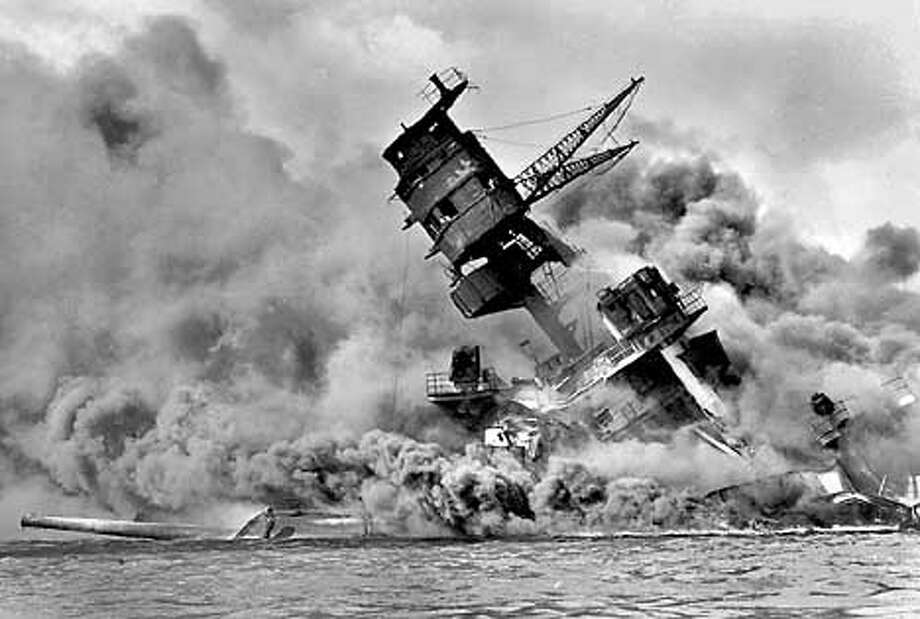
In the surprise attack on ‘Battleship Row’ on December 7th, the Arizona and Utah were damaged beyond repair by bombs or torpedo hits; most ships returned to service. Of the 2,026 American sailors and marines killed in the attack, 1,606 had been aboard these two ships.
Four more battleships (Oklahoma, California, West Virginia, and Nevada) sank upright in the shallow water of the harbor. They were salvaged, and while many vessels did not return to the battlefield for several years, most suffered repairable damage. The Oklahoma sunk off the coast of California while under tow. The Battleship Missouri is now anchored there.

These two mighty naval battleships proudly served the United States for many decades, anchored near each other in the harbor. Battleship Arizona, resting below the gentle waves of the harbor, where it blew up and sank during the attack on the “date which will live in infamy.” This attack started the USA’s formal entry into World War II.
Battleship Missouri represents the end of the war. This mighty ship, launched in 1944, participated in the shelling of Iwo Jima and Okinawa before sailing into Tokyo Bay to host the formal surrender of Japan. They signed at a small table on her teak decks with sailors and marines witnessing the proceedings.

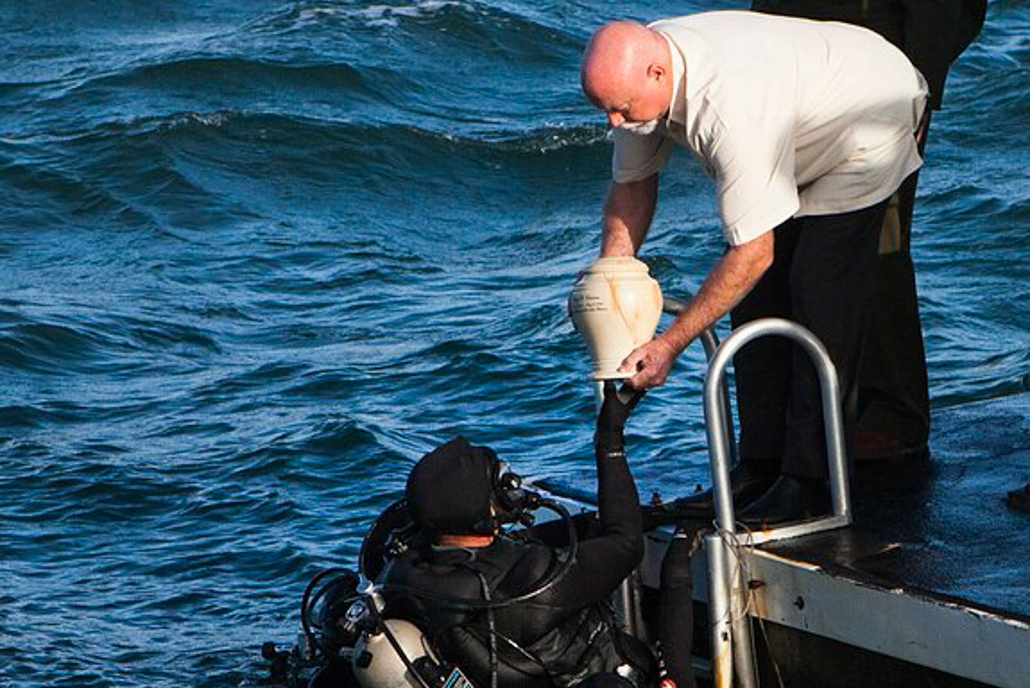
A remarkable USS Arizona fact that honors the survivors is that they have the option to join their lost comrades and make the ship their final resting place. Crew members who served on board the USS Arizona during the attack may choose to have their ashes deposited by divers beneath one of sunken Arizona’s gun turrets.
Brothers Serving Together
Roughly 44 Arizona survivors have chosen this option. Other military survivors can choose to have their ashes scattered wherever their ship was located during the attacks. The last person to be interred in the ship was in 2019.
There were 2335 service members and 68 civilians, for a total of 2403 people killed during the Pearl Harbor attack who are remembered on Pearl Harbor Day each year. (There were 1178 wounded.) Of those, almost 1/2 or 1177 died when the USS Arizona was fatally attacked and exploded.
Yes, the Battleship Arizona had 23 sets of brothers. There were 37 different families in pairs or trios for a total of 77 men. Only 15 of them survived, which was devastating. This policy was changed due to the tragic events of this day, but many brothers still served together throughout the war nonetheless.
By the time the first Japanese bomber appeared over Pearl Harbor on December 7, 1941, tensions between Japan and the United States had been mounting for the better part of a decade, making war seem inevitable. Japanʻs naval forces depended on the United States to supply natural and industrial resources (namely, oil), without which its forces would be significantly impaired. This led Japan to target Southeast Asia, which is rich in minerals and oil. While they knew that such an invasion would lead to war against America, Japan decided to destroy America’s Pacific Fleet to prevent American interference in its plan to access countries’ resources in Southeast Asia, which Japan called the “Southern Resource Area.”
This was the primary reason behind the attack on Pearl Harbor.

Japan concentrated on just destroying the battleships of the US Navy as it thought that the Pacific fleet battles would be decided on them. This proved to be wrong.
Had Japan focused the attack beyond the fleet and targeted navy repair yards, oil tank farms, submarine bases, and old headquarters building, it could have inflicted far greater damage. Because the plan was made to focus on battleships, American aircraft carriers were untouched by the attack (they were out at sea). This led to America being able to rebuild quickly for the war on Japan and ultimately reverse the Japanese advance after the setbacks of early 1942.
Admiral Hara Tadaichi summed up the Japanese result by saying, “We won a great tactical victory at Pearl Harbor and thereby lost the war.”

The day before the attacks, the USS Arizona took on a full load of fuel, nearly 1.5 million gallons. Much of that fuel helped ignite the explosion and subsequent fires that destroyed the ships, but amazingly, some fuel continues to seep out of the wreckage.
According to the History Channel, the Arizona “continues to spill up to 9 quarts of oil into the harbor each day.” This adds to the emotional gravity of this memorial and those visiting often refer to this phenomenon as the “tears of the Arizona” or “black tears.”

The attack on Pearl Harbor created a wave of patriotism and outrage. Less than a year after Pearl Harbor, 50 million of 132 million Americans were employed in the war effort working for the government. This mass industrialism allowed the US Navy to build all sorts of boats quickly, including 77 Gato class submarines (USS Bowfin) that were built between 1940 and 1944.
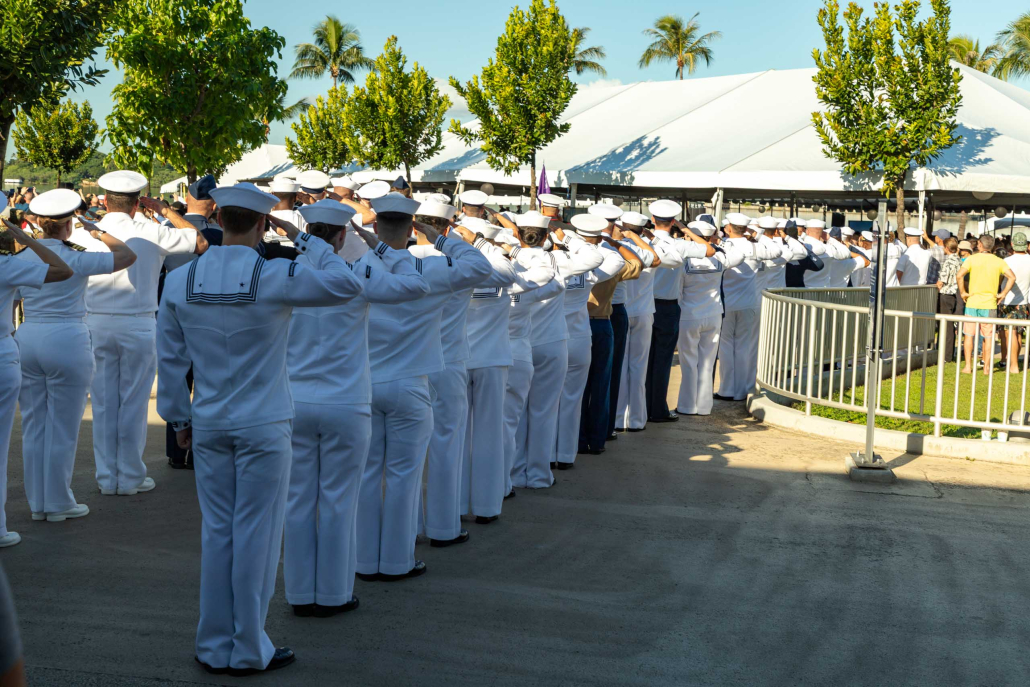
Japanese Admiral Isoroku Yamamoto conceived the Pearl Harbor attack, and Captain Minoru Genda planned it. Two things inspired Yamamoto’s Pearl Harbor idea: a prophetic book and a historic attack. The Great Pacific War was written in 1925 by Hector Bywater, a British naval authority. It was a realistic account of a clash between the United States and Japan that began with the Japanese destruction of the U.S. fleet and proceeded to a Japanese attack on Guam and the Philippines. When Britain’s Royal Air Force successfully attacked the Italian fleet at Taranto on November 11, 1940, Yamamoto was convinced that Bywater’s fiction could become a reality.

The Japanese attacked Pearl Harbor a second time on March 4th, 1942, in what they called Operation K. They used two 4 engine naval flying boats, nicknamed “Emily” by the allies. It was somewhat like America’s PBY but much larger. They could carry one ton of bombs and had a crew of 10. Also known as the flying porcupine, it had five 20mm cannons and four machine guns in turrets and blisters. This time radar saw them coming, and just after midnight, air defense dispatched fighters to patrol Pearl Harbor. Unable to see the target due to cloudy weather, one aircraft dropped bombs on a remote hillside and the other into the ocean.

While most people can tell you that the Japanese were responsible for the attacks, not everyone realizes that the Japanese now visit the memorial in droves.
Japan, now one of America’s strongest allies, is the largest source of international tourists to the state of Hawaii. Japanese visitors pay their respects at National Memorial just as Americans do.
Are you interested in learning more? Read this post about the things we donʻt think you know.




Things To Do In Oahu
We list some of the most popular things to do in Oahu. Start your exploration with a visit to the Arizona Memorial using a local expert tour guide. Get more out of your vacation to Hawaii with our recommendations. Check it out now.
Read moreThe Silent Service
A brief history of submarine warfare, from early inventions to nuclear submarines, highlighting key battles, innovations, and strategic impact worldwide.
Read moreAmerica’s Battleships at Pearl Harbor
On December 7, 1941, Japanese forces struck Pearl Harbor’s Battleship Row, devastating U.S. battleships and forever altering the course of World War II.
Read moreCelebrating Our Veterans
Honor Veterans Day with a visit to Pearl Harbor and discover the history, meaning, and significance of this day dedicated to honoring U.S. veterans from all wars. Learn how to express gratitude in respectful, meaningful ways.
Read moreThe Making of Tora! Tora! Tora!
The making of Tora! Tora! Tora! (1970): A look at the meticulous efforts and challenges in recreating the Pearl Harbor attack.
Read moreNational Pearl Harbor Remembrance Day
Remember Pearl Harbor is something we repeat and is on our tag-line because there are so many important lessons to be learned from the events of that infamous day back in 1941
Read moreHistory of the Pineapple
Pineapples have had an influence on our diets and even architecture. Learn all about pineapples from Hawaii and across the world. The founders, the growth and even varieties available today.
Read moreAncient Hawaiian History Timeline
As Polynesians continued to arrive in the Hawaiian islands from the south the native populations grew around the now expanding shallow lagoon.
Read moreThings You Donʻt Know About Pearl Harbor
There is a rich and important history associated with this area both before, during, and after the Japanese attack. Here are a few fun things you may not have known about Pearl Harbor.
Read moreBuilding The Hawaiian Kingdom
As Kamehameha battled for control of all the islands foreigners began to play a key role in his plans for a kingdom. In those days the Mo’i or King of an island was the absolute ruler.
Read morePearl Harbor Attack
It was a sunny Sunday morning when, on December 7, 1941, the Imperial Japanese Air Force launched planes from 6 Japanese aircraft carriers North of Oahu. The rest is history.
Read more